Insights
Analysis and commentary on the Network’s experiences coordinating climate-resilient development.
Ghana, Netherlands, and Peer Governments Gather in Accra to Accelerate National Action to Adapt to Climate Change
ACCRA, Ghana — From August 17 to 19, the governments of Ghana, Kenya, the Netherlands, and South Africa are convening…
From Country Priorities to Global Signals: A step-by-step guide to adaptation indicators for national monitoring, evaluation, and learning systems
Countries left the Bonn Climate Change Conference last week without an agreement on issues related to the global goal on…
La República Dominicana Fortalece la Colaboración en el Proceso de Actualización del Plan Nacional de Adaptación
La República Dominicana organizó en febrero pasado una serie de consultas entre actores clave del gobierno y la comunidad, para…
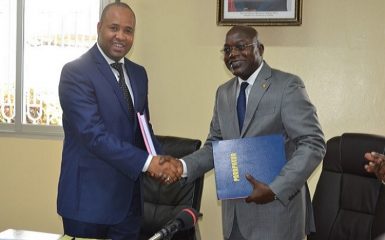
From the Bottom Up: Key lessons learned from Senegal’s NAP process
By Dr. Khady Sané Diouf and Ms. Fatou Thiaw, COMFISH
In October 2017, the NAP Global Network invited Dr. Khady Sané Diouf (Project Director) and Ms. Fatou Thiaw (Climate Change Officer)—representatives from the Collaborative Management for a Sustainable Fisheries Future in Senegal (COMFISH) initiative—to share their experience on Senegal’s NAP process during a regional meeting organized in Lomé, Togo. Senegal is taking a sectoral approach […]
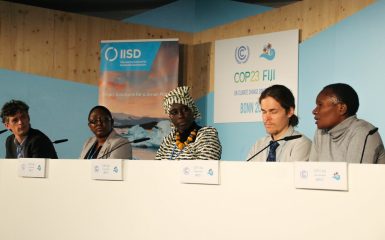
COP 23: Moving the conversation on gender and climate change adaptation forward
by Angie Dazé and Julie Dekens, IISD
The first United Nations Framework Convention on Climate Change (UNFCCC) Gender Action Plan (GAP), developed under the Lima work program on gender, was adopted at COP 23 to help UNFCCC parties implement gender-related decisions and mandates under the UNFCCC process. The (draft) decision includes a commitment to gender balance, participation and women’s leadership and gender-responsive […]
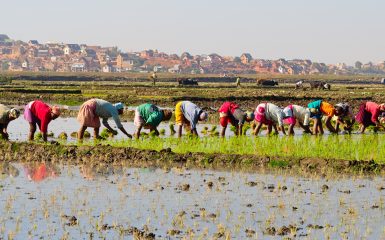
Successful NAP Financing Requires a Strategic Approach
by Jo-Ellen Parry (IISD) and Michael Brossmann (GIZ)
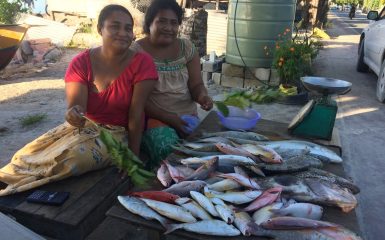
Kiribati Strengthens Gender Considerations in the Revision of its NAP Document
Julie Dekens (IISD), Choi Yeeting (Office of the President, Kiribati), Anne Kautu (Ministry of Women, Youth and Social Affairs, Kiribati)
See also: NAP Global Network report on Strengthening Gender Considerations in Kiribati’s NAP Process. Kiribati—a country made of 33 low-lying atolls scattered across the Pacific Ocean—is already experiencing an increase in sea-surface temperatures and sea-level rise. Adding to these risks is Kiribati’s extreme remoteness, with hundreds of kilometres of ocean between the atolls and their […]

National and Sub-national Gov’ts Collaborate to Implement Ethiopia’s NAP
by Asrat Yirgu, IISD/MEFCC, and Angie Dazé, IISD
Climate variability is nothing new in Ethiopia. However, recent years have seen the southern and central parts of the country experience the worst drought in over 50 years, followed by another severe drought in 2016, which again affected the southern parts of the country, as well as the Somali region in the east. Today, many […]
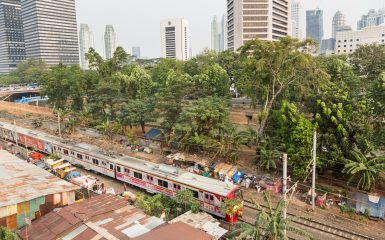
Public–Private Partnerships: Financing climate-resilient infrastructure
by David Uzsoki, IISD
According to UN Environment, the costs of adapting to climate change could range between USD 280 billion and USD 500 billion by 2050. Climate-resilient infrastructure plays an important role in the national adaptation plan (NAP) process. Countries cannot rely solely on public resources for deploying these projects, and need to find ways to access private […]
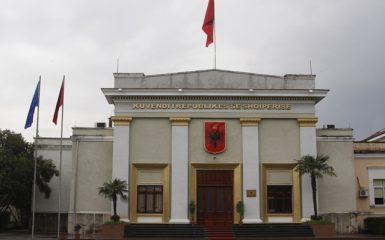
How Albania Is Integrating Climate Change Adaptation Into the Medium-Term Budget
by Anila Çili, IISD
Mainstreaming climate change adaptation into a country’s medium-term budget is a multi-dimensional, continuous process that takes time. Recently, Albania successfully took on this challenge. As with any new policy that has relevant impacts in several sectors of the economy at once—as is the case with climate change adaptation—a transitional period is required to understand the […]

Telling Climate Change Stories: Five lessons from Saint Lucian journalists
by Christian Ledwell and Damon Vis-Dunbar, IISD
Journalists play an important role as watchdogs for many social problems. But with a problem as large in scope and complexity as climate change, how can journalists tell stories that spur action and help audiences prepare for its impacts? Read this full blog via IISD.