Insights
Analysis and commentary on the Network’s experiences coordinating climate-resilient development.
Ghana, Netherlands, and Peer Governments Gather in Accra to Accelerate National Action to Adapt to Climate Change
ACCRA, Ghana — From August 17 to 19, the governments of Ghana, Kenya, the Netherlands, and South Africa are convening…
From Country Priorities to Global Signals: A step-by-step guide to adaptation indicators for national monitoring, evaluation, and learning systems
Countries left the Bonn Climate Change Conference last week without an agreement on issues related to the global goal on…
La República Dominicana Fortalece la Colaboración en el Proceso de Actualización del Plan Nacional de Adaptación
La República Dominicana organizó en febrero pasado una serie de consultas entre actores clave del gobierno y la comunidad, para…

Adaptation: Accelerating Action Towards a Climate Resilient Future
By Yannick Glemarec, Green Climate Fund Executive Director
Climate change is an existential threat to all people. The challenges it poses are immediate and urgent. Evidence of ever-higher levels of climate risks are mounting, as global temperatures increase, sea levels rise and glaciers melt. More and more people worldwide are feeling the impacts of water scarcity, heat waves and wildfires, and, in some instances, catastrophic storms and floods. Vulnerable groups in developing countries, such as coastal communities, smallholder farmers and the urban poor, are particularly affected by rising temperatures and climate-related disasters.

How Can the NAP Process Enhance Adaptation in the NDCs by 2020? We’ve got three ideas.
By Janet Strachan and Anika Terton
When it comes to adapting to climate change and achieving the goals of the Paris Agreement, nations around the world have access to a few useful processes to help them reach their goals—namely, their Nationally Determined Contributions (NDC) and National Adaptation Plan (NAP) processes. In countries where adaptation information is included in NDCs, the two […]
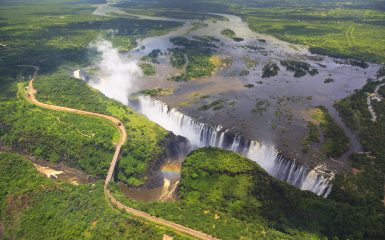
Zimbabwe’s Green Climate Fund (GCF) – National Adaptation Planning (NAP) Process Roadmap Development
By Emily F. Matingo, Climate Change Scientist, Ministry of Lands, Agriculture, Water, Climate and Rural Resettlement, Zimbabwe
See also: Zimbabwe’s NAP Roadmap. On February 20, over 100 participants gathered in Bulawayo, Zimbabwe, to attend the launch of Zimbabwe’s National Adaptation Plan (NAP) Readiness Project, financed by the Green Climate Fund. Before embarking on the GCF–NAP Readiness Project, the Government of Zimbabwe developed its NAP roadmap. The primary goal of the NAP roadmap is […]
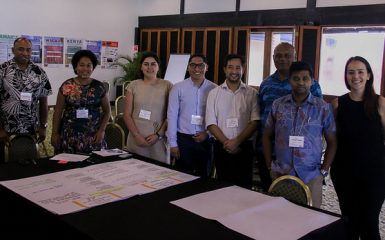
Key Actions Advancing Fiji’s NAP Process
A conversation with Adrian Fenton
In an interview conducted by Clare Church, the National Adaptation Plan (NAP) Global Network spoke with Adrian Fenton, embedded advisor to the Fijian Government, who has been supporting the Ministry of Economy with the development of Fiji’s NAP process. Some answers may have been shortened for clarification and brevity.
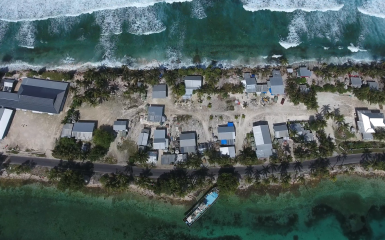
How Technology and Community Insights Are Driving Adaptation Planning in the Pacific
By Ziona Eyob, Clare Church and Patrina Dumaru
A look at Integrated Vulnerability Assessments through an expert lens.

“Is there a gender issue?”
By Clare Church and Angie Dazé
Lessons from Jamaica’s Workshop on Integrating Gender into the NAP Process.

El rol de los medios frente al cambio climático
Por Cesar Henrique Arrais
Entrevista con el especialista en comunicaciones Víctor Santillán, sobre el primer Taller Nacional de Comunicadores y Periodistas sobre Cambio Climático en el Perú.
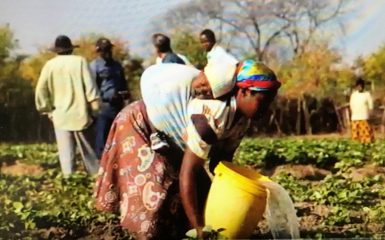
Blog Perspective: Zimbabwe’s National Adaptation Plan experience
By Emily F. Matingo, Climate Change Scientist, Ministry of Lands, Agriculture, Water, Climate and Rural Resettlement, Zimbabwe
Zimbabwe is experiencing more hot and fewer cold days than before as a result of climate change and climate variability. The country’s annual mean surface temperature has warmed by about 0.40C from 1900 to 2000. Zimbabwe’s third National Communication to the United Nations Framework Convention on Climate Change (UNFCCC) asserts that the period from 1980 […]