Insights
Analysis and commentary on the Network’s experiences coordinating climate-resilient development.
Ghana, Netherlands, and Peer Governments Gather in Accra to Accelerate National Action to Adapt to Climate Change
ACCRA, Ghana — From August 17 to 19, the governments of Ghana, Kenya, the Netherlands, and South Africa are convening…
From Country Priorities to Global Signals: A step-by-step guide to adaptation indicators for national monitoring, evaluation, and learning systems
Countries left the Bonn Climate Change Conference last week without an agreement on issues related to the global goal on…
La República Dominicana Fortalece la Colaboración en el Proceso de Actualización del Plan Nacional de Adaptación
La República Dominicana organizó en febrero pasado una serie de consultas entre actores clave del gobierno y la comunidad, para…
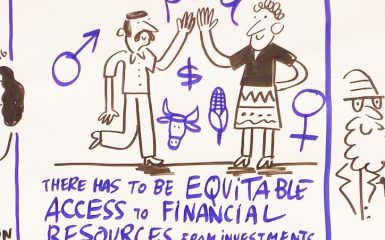
Unpacking Gender-Responsive Adaptation Finance: Key issues and the way forward
By Angie Dazé
As finance for climate change adaptation is scaled up, there is a real opportunity to promote human rights and gender equality in line with the ambitions of the Paris Agreement. However, without careful consideration, there is also a real risk that these investments will not benefit those who need them most—vulnerable people in communities on […]
NAPs and the GAP: Five ways National Adaptation Plan processes can support implementation of the enhanced Gender Action Plan
By Angie Dazé
While COP25 was underwhelming in terms of its results, there was one bright spot in relation to addressing the gender dimensions of climate change under the United Nations Framework Convention on Climate Change (UNFCCC). Over the course of 2019, UNFCCC Parties and stakeholders undertook a process to review the Lima Work Programme on gender (established […]

The National Adaptation Plan (NAP) Process: Frequently Asked Questions
Basics | History | The NAP process itself | Guidance | Key issues | NAPs and the Paris Agreement | Summary The impacts of climate change are happening today and will continue to be felt over this century and beyond. Responding effectively to climate change requires urgently cutting our emissions as well as adapting to its impacts. […]
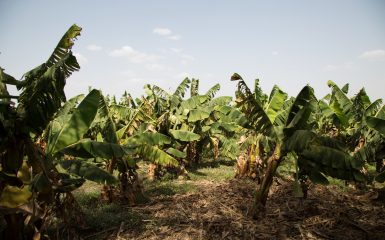
Participatory Development of Vulnerability Assessments in Benin, Burkina Faso, and Senegal for Better Adaptation Planning
By Sönke Marahrens, GIZ, Sarah D’haen & Melinda Noblet, Climate Analytics
Vulnerability assessments are an important part of a country’s National Adaptation Planning process, providing evidence for adaptation practitioners to make informed decisions about where adaptation action is needed most. Supported by Climate Analytics through the project “Science-based support for NAP processes in francophone Least Developed Countries of sub-Saharan Africa” (PAS-PNA)[1], the governments of Benin, Burkina […]

Striving to Adapt to Climate Change: Lessons from Albania
By Laureta Dibra, Lindita Tafaj and Alexandre Borde
Albania is suffering from the effects of extreme weather events such as flooding, droughts and heat waves. During the last 10 years, floods have devastated regions and cities such as Shkodër, Tiranë, Vlorë and Fier, and posed a significant threat to Albania’s economy, ecosystems and people’s health. Recurring floods caused USD 218 million in damage […]
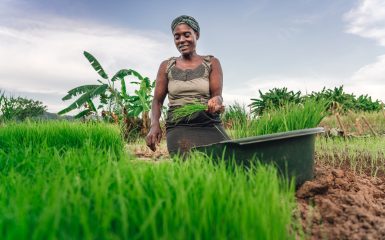
Malawi Gears Up to Adapt to Climate Change
By Donald Reuben Kamdonyo, Ph.D., Climate Change Specialist, Kamdonyo & Associates, Lilongwe, Malawi
Globally, climate change has been recognized as one of the biggest challenges that humanity is facing today. It has serious worldwide implications on economic development, food security and poverty eradication for developing countries, especially for least-developed countries like Malawi. All of Malawi’s socioeconomic sectors have been, and will continue to be, affected by climate change […]
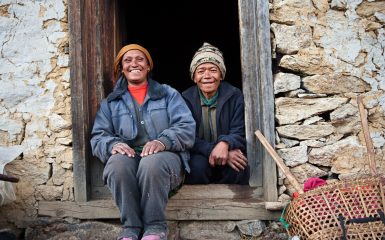
Adaptation to Climate Change: Putting people first
by Daniel Morchain
This op-ed was originally published in Portuguese by “A Tarde” newspaper from Salvador, Brazil, on August 19, 2019. This week, people from all over Latin America gather under the auspices of the United Nations Framework Convention on Climate Change (UNFCCC) in Salvador, Brazil, to discuss—and hopefully act on—the climate crisis we are all experiencing, a […]
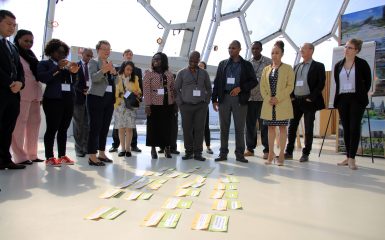
Self-Assessment: A Learning Tool for Improving the Effectiveness of NAP Processes
The NAP Global Network’s South–South peer learning events provide a forum for exploring different aspects of the NAP process, focusing on key technical issues that will improve effectiveness. These events have used a variety of methods to support NAP actors from different countries in building their knowledge and learning from one another. Among these, self-assessment […]