Insights
Analysis and commentary on the Network’s experiences coordinating climate-resilient development.
Ghana, Netherlands, and Peer Governments Gather in Accra to Accelerate National Action to Adapt to Climate Change
ACCRA, Ghana — From August 17 to 19, the governments of Ghana, Kenya, the Netherlands, and South Africa are convening…
From Country Priorities to Global Signals: A step-by-step guide to adaptation indicators for national monitoring, evaluation, and learning systems
Countries left the Bonn Climate Change Conference last week without an agreement on issues related to the global goal on…
La República Dominicana Fortalece la Colaboración en el Proceso de Actualización del Plan Nacional de Adaptación
La República Dominicana organizó en febrero pasado una serie de consultas entre actores clave del gobierno y la comunidad, para…
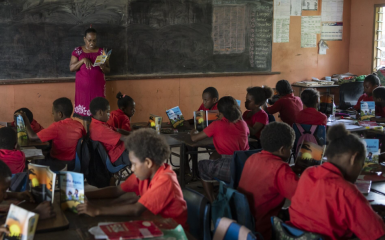
Why the Education Sector Matters in the National Adaptation Plan Process: New resources for NAP teams and education ministries
Climate change is already closing schools, disrupting learning, and placing the education of millions of children at risk every year. Climate change impacts destroy and damage education infrastructure and threaten the safety, health, and well-being of students and teachers, while extreme heat affects concentration and learning outcomes, leaving the most fragile education systems disproportionately at risk. In 2024 alone, 242 million students from pre-primary to upper secondary had their […]

Key Pillars Guiding Malaysia’s National Adaptation Plan Process: What can we learn?
By Jasmin Irisha Jim Ilham, Senior Climate Change Adaptation Coordinator for Malaysia
Malaysia is developing its first inclusive national adaptation plan (MyNAP), which is built upon four strategic pillars. It also sets out key principles for advancing the country’s NAP process. This article outlines how Malaysia is working to mark a major milestone in its NAP process around key pillars and principles—from strengthening governance and data systems to unlocking private investment and scaling adaptation finance.
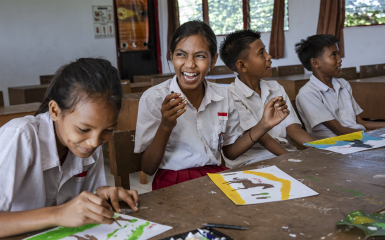
What Can We Learn From How Countries Include Education, Children and Youth in Their NAP Processes?
Jennifer Merryweather, Education Specialist, NAP Global Network & Save the Children
To mark the International Day of Education and the power of youth in co-creating education, this article outlines what we can learn from countries that are already including children, youth, and education in their NAP processes.

How Arts, Culture, and Community Engagement Are Driving Climate Resilience in Saint Lucia
By: Danielle Du Bois, National Communications and Stakeholder Engagement Specialist, GCF NAP Readiness Project
Saint Lucia’s national adaptation plan (NAP) process is advancing along two parallel tracks: policy development through engagement and public sensitization.
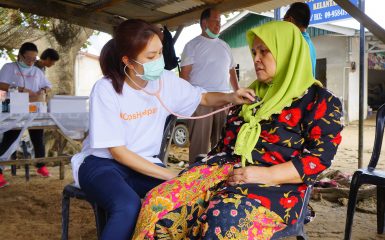
Building Climate-Resilient Health Systems: Four key actions to follow in National Adaptation Plan (NAP) processes
By Amy Savage (World Health Organization [WHO]), Angie Dazé (IISD), and Elena Villalobos Prats (WHO)
More than a year into the COVID-19 pandemic, we are seeing major disruptions in the delivery of essential health services. As attention shifts to recovery, we have an opportunity to build health systems that are more resilient to future health shocks as well as to the impacts of climate change. National Adaptation Plan (NAP) processes provide a basis for ensuring that this happens.

Botswana’s Pragmatic Approach to a Climate-Proof Economy
Sennye Masike PhD, Environmental Economist, CLIMsystems Ltd
Botswana’s National Adaptation Plan (NAP) framework will contribute to the country’s climate change adaptation efforts by guiding the development of the NAP process and give direction to sectoral initiatives.
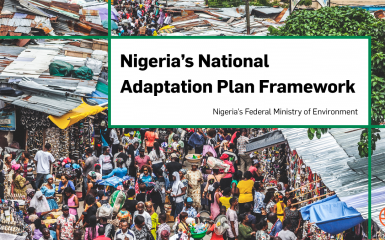
Making Adaptation More Effective in Nigeria: Nigeria’s NAP process
Yerima Tarfa (PhD), Director, Climate Change Department, Federal Ministry of Environment, Abuja and Francis Adesina (PhD), Obafemi Awolowo University, Ile-Ife.
The process of developing Nigeria’s National Adaptation Plan Framework has unveiled the challenges in Nigeria’s adaptation programming, particularly showing which issues need attention for a greater impact in the country.
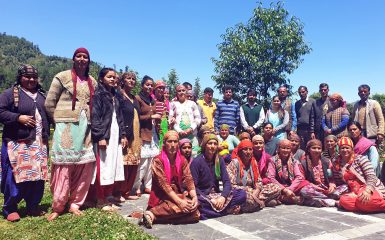
Mainstreaming as a Means for Localizing and Implementing Adaptation Actions
By Kirtiman Awasthi, Somya Bhatt and Ashish Chaturvedi, GIZ India
This process of mainstreaming adaptation has the potential to improve the resilience of development outcomes, enhance community resilience to climate change impact, and safeguard investments.