Insights
Analysis and commentary on the Network’s experiences coordinating climate-resilient development.
Ghana, Netherlands, and Peer Governments Gather in Accra to Accelerate National Action to Adapt to Climate Change
ACCRA, Ghana — From August 17 to 19, the governments of Ghana, Kenya, the Netherlands, and South Africa are convening…
From Country Priorities to Global Signals: A step-by-step guide to adaptation indicators for national monitoring, evaluation, and learning systems
Countries left the Bonn Climate Change Conference last week without an agreement on issues related to the global goal on…
La República Dominicana Fortalece la Colaboración en el Proceso de Actualización del Plan Nacional de Adaptación
La República Dominicana organizó en febrero pasado una serie de consultas entre actores clave del gobierno y la comunidad, para…

Three Key Actions to Make NAP Processes More Gender-Responsive
by Angie Dazé and Julie Dekens, IISD
Following our pilot analysis of how gender considerations are being integrated into national adaptation planning documents, we at the National Adaptation Plan (NAP) Global Network have been reflecting on the best way forward to achieve gender-responsive NAP processes. How can country teams move forward in addressing gender issues in their NAP processes? We have developed […]

How Nepal is Linking National and Sub-National Adaptation
by Aditya V. Bahadur, Action on Climate Today
As many of the impacts climate change are felt most acutely at the local level, it is vital that the people who are at the forefront of climate change—those who are experiencing the impacts—really have a say in national-level policy. This is why it is so imperative for countries to engage in forming National Adaptation […]

Interview: Nella Canales on Leveraging Climate Finance for Adaptation in the Pacific
by Christian Ledwell, IISD
Pacific island states are among the world’s most vulnerable to climate change impacts. Given the urgent need to adapt, how effectively are climate finance flows helping Pacific states tackle adaptation? The Stockholm Environment Institute’s recent working paper, Climate Finance in the Pacific: An Overview of Flows to the Region’s Small Island Developing States, analyzed climate […]
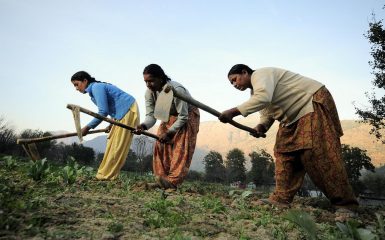
Gender in National Adaptation Plan (NAP) Processes: A pilot review of climate change adaptation planning documents from 15 countries
by Angie Dazé and Julie Dekens, IISD
The linkages between gender and climate change adaptation have been recognized as a key issue under the United Nations Framework Convention on Climate Change (UNFCCC) since the early 2000s. The 2015 Paris Agreement increased the ambition on gender, referring to gender equality and women’s empowerment and calling for action on climate change to be gender-responsive. […]
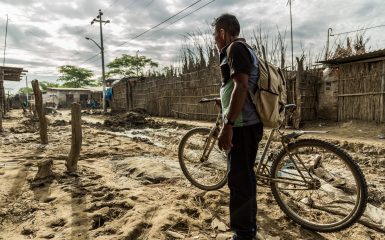
A Climate-Responsible Peru: A force for recovery and growth
by Víctor Santillán, Communications Specialist, General Direction of Climate Change and Desertification of the Ministry of the Environment, Peru
Can you imagine a country with that provides sustainable and resilient services, health services appropriate to climate variability, education that connects us with the environment, agricultural infrastructure that efficiently uses rainfall, resilient cities using clean energy, and citizens and villages prepared for extreme climate events? The country you are imagining is the country that Peruvians […]

Donor Perspective: Why bilateral coordination in the NAP process matters
by Christian Ledwell, IISD
This blog looks at a perspective on bilateral donor coordination in the NAP process based on remarks by John Furlow, Senior Adaptation Advisor with U.S. Agency for International Development (USAID), made during a recent webinar held by the NAP Global Network and other NAP Global Network workshops. A key question that underpins why countries are engaging in National Adaptation […]
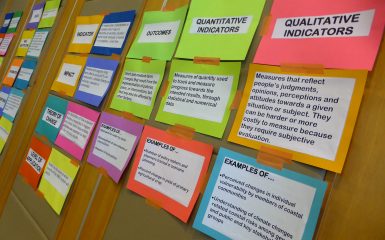
Top Three Challenges and Opportunities of National Monitoring and Evaluation of Adaptation
by Angelica V. Ospina and Hayley Price-Kelly, IISD
Adaptation takes place in highly dynamic and complex environments. As the design and implementation of National Adaptation Plans (NAPs) advance, adaptation planners are increasingly focusing on monitoring and evaluation (M&E) of adaptation progress and outcomes. This interest reflects a commitment to strengthening the effectiveness of adaptation efforts and climate-resilient development through improved accountability and reporting, […]

Working Towards a Caribbean Regional Approach to Monitoring and Evaluating NAPs
by Dawn Pierre-Nathoniel, Sustainable Development & Environment Officer, Saint Lucia
Saint Lucia, like many of our Caribbean neighbours, has been committed, for many years, to building its resilience to climate change. Though we are at the early stages of the National Adaptation Plan (NAP) process, we recognize it as an important opportunity to prepare our society and economy for climate change impacts. While the NAP […]