Insights
Analysis and commentary on the Network’s experiences coordinating climate-resilient development.
Ghana, Netherlands, and Peer Governments Gather in Accra to Accelerate National Action to Adapt to Climate Change
ACCRA, Ghana — From August 17 to 19, the governments of Ghana, Kenya, the Netherlands, and South Africa are convening…
From Country Priorities to Global Signals: A step-by-step guide to adaptation indicators for national monitoring, evaluation, and learning systems
Countries left the Bonn Climate Change Conference last week without an agreement on issues related to the global goal on…
La República Dominicana Fortalece la Colaboración en el Proceso de Actualización del Plan Nacional de Adaptación
La República Dominicana organizó en febrero pasado una serie de consultas entre actores clave del gobierno y la comunidad, para…
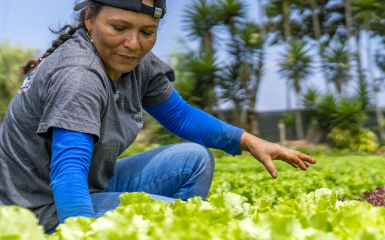
Climate Change Adaptation Investment Plans: Frequently Asked Questions
Climate change adaptation investment planning offers a structured approach to unlocking financial resources and accelerating the transition toward implementing countries’ adaptation priorities. In this explainer, the NAP Global Network’s experts answer some of the frequently asked questions about adaptation investment planning.
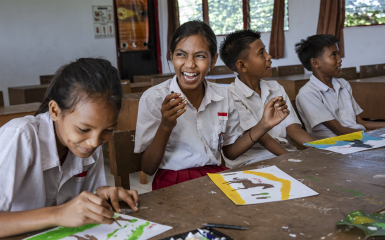
What Can We Learn From How Countries Include Education, Children and Youth in Their NAP Processes?
Jennifer Merryweather, Education Specialist, NAP Global Network & Save the Children
To mark the International Day of Education and the power of youth in co-creating education, this article outlines what we can learn from countries that are already including children, youth, and education in their NAP processes.

Five Key Lessons From Viet Nam’s National Adaptation Plan Mid-Term Evaluation
Tran Thanh Thuy, Tran Anh Phuong, Tran Thi Thanh Nga, Emilie Beauchamp
In this article, experts highlight key insights and recommended actions from Viet Nam’s NAP mid-term evaluation process. with the aim to enhance its effectiveness and equity.

How Arts, Culture, and Community Engagement Are Driving Climate Resilience in Saint Lucia
By: Danielle Du Bois, National Communications and Stakeholder Engagement Specialist, GCF NAP Readiness Project
Saint Lucia’s national adaptation plan (NAP) process is advancing along two parallel tracks: policy development through engagement and public sensitization.

Haïti renforce son adaptation climatique avec un cadre national de suivi, évaluation et apprentissage pour son Plan National d’Adaptation
English Vous pouvez consulter l’intégralité du cadre de SEA du PNA d’Haïti ici. Face à une vulnérabilité climatique parmi les plus élevées au monde (ouragans récurrents, sécheresses, inondations et érosion des sols), Haïti a franchi une étape majeure en janvier 2023 avec la soumission officielle de son Plan National d’Adaptation (PNA) à la Convention-cadre des […]
Haiti’s New Monitoring, Evaluation, and Learning Framework: Strengthening Climate Adaptation Efforts
A participatory effort in Haiti equips the country with clearer tools to support long-term adaptation planning.
Facing some of the highest climate vulnerabilities in the world, including recurrent hurricanes, droughts, floods, and soil erosion, Haiti took a major step forward in January 2023 with the official submission of its national adaptation plan (NAP) to the UN Framework Convention on Climate Change. Aligned with the National Climate Change Policy (and the Nationally […]
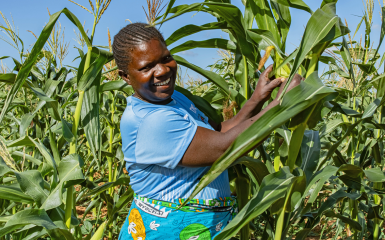
How Countries Are Advancing Monitoring, Evaluation, and Learning Across Their National Adaptation Plan Processes
Monitoring, evaluation, and learning (MEL) systems are a core component of both the national adaptation plan (NAP) process and the NAP document. They are designed to assess whether adaptation strategies are achieving their intended outcomes, to understand how and for whom they are effective, and to inform adjustments based on evidence. Essentially, MEL systems generate insights on what works, what does not, and why, […]

What It Looks Like to Integrate Effective Learning Into National Adaptation Plan Processes
Julie Dekens (International Institute for Sustainable Development) and Blane Harvey (McGill University)
Adapting to the impacts of climate change demands significant shifts in attitudes, behaviours, and practices, both among those directly affected and among policy and decision-makers. For instance, farmers may need to transition away from cultivating crops that are highly sensitive to climate hazards. At the same time, policy-makers must systematically integrate climate change adaptation […]