Insights
Analysis and commentary on the Network’s experiences coordinating climate-resilient development.
Ghana, Netherlands, and Peer Governments Gather in Accra to Accelerate National Action to Adapt to Climate Change
ACCRA, Ghana — From August 17 to 19, the governments of Ghana, Kenya, the Netherlands, and South Africa are convening…
From Country Priorities to Global Signals: A step-by-step guide to adaptation indicators for national monitoring, evaluation, and learning systems
Countries left the Bonn Climate Change Conference last week without an agreement on issues related to the global goal on…
La República Dominicana Fortalece la Colaboración en el Proceso de Actualización del Plan Nacional de Adaptación
La República Dominicana organizó en febrero pasado una serie de consultas entre actores clave del gobierno y la comunidad, para…
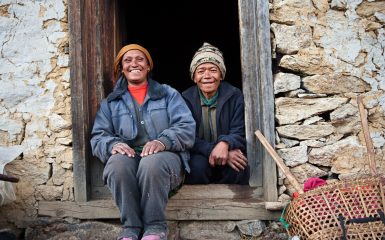
Adaptation to Climate Change: Putting people first
by Daniel Morchain
This op-ed was originally published in Portuguese by “A Tarde” newspaper from Salvador, Brazil, on August 19, 2019. This week, people from all over Latin America gather under the auspices of the United Nations Framework Convention on Climate Change (UNFCCC) in Salvador, Brazil, to discuss—and hopefully act on—the climate crisis we are all experiencing, a […]
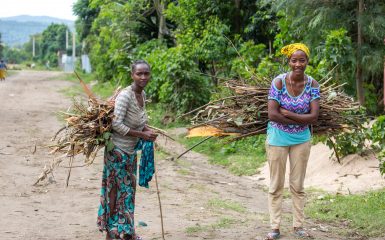
Why Gender Matters in Climate Change Adaptation
By Angie Dazé
Climate change is THE challenge facing humanity today. Experts are raising the alarm about this crisis with increasing anxiety. Clearly, urgent action is needed to reduce greenhouse gas emissions in order to limit the global temperature rise over the coming years. But what about the people who are experiencing the impacts of climate change now, […]
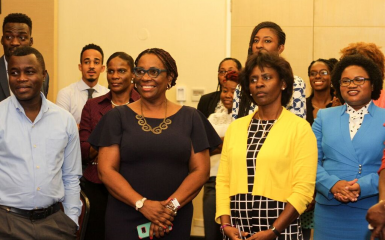
“Is there a gender issue?”
By Clare Church and Angie Dazé
Lessons from Jamaica’s Workshop on Integrating Gender into the NAP Process.
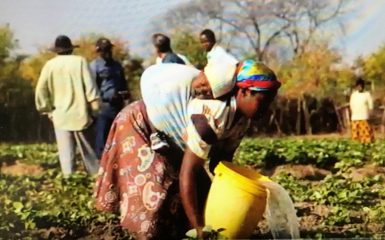
Blog Perspective: Zimbabwe’s National Adaptation Plan experience
By Emily F. Matingo, Climate Change Scientist, Ministry of Lands, Agriculture, Water, Climate and Rural Resettlement, Zimbabwe
Zimbabwe is experiencing more hot and fewer cold days than before as a result of climate change and climate variability. The country’s annual mean surface temperature has warmed by about 0.40C from 1900 to 2000. Zimbabwe’s third National Communication to the United Nations Framework Convention on Climate Change (UNFCCC) asserts that the period from 1980 […]
Gender and Climate Change Adaptation: A learning journey
By Angie Dazé, IISD
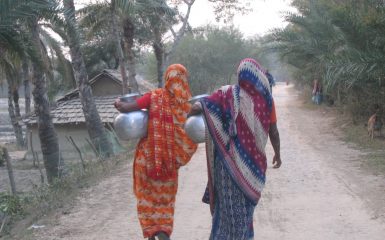
The first time I was exposed to the gender dimensions of climate change adaptation was almost 15 years ago in the southwestern region of Bangladesh. I was working on a community-based adaptation project—in those days, taking a locally driven approach to adaptation was innovative in and of itself! In these rural communities surrounded by mangroves […]
Gender-Responsive Adaptation in Peru
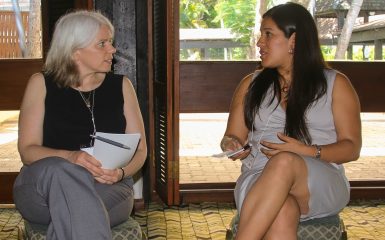
Interview with Ivonne Yupanqui Valderrama, Peru, on integrating gender into the National Adaptation Plan process.
In February 2018, the Government of the Republic of Fiji and the National Adaptation Plan (NAP) Global Network co-hosted workshops to emphasize why gender needs to be integrated into climate change planning and action. Angie Dazé from the International Institute for Sustainable Development and Maritza Ivonne Yupanqui Valderrama—Director General of Peru’s Department of Gender Mainstreaming […]
COP 23: Moving the conversation on gender and climate change adaptation forward
by Angie Dazé and Julie Dekens, IISD
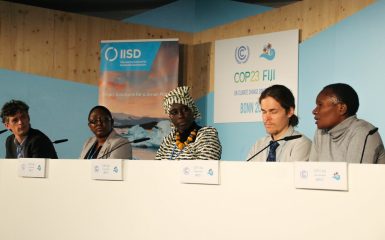
The first United Nations Framework Convention on Climate Change (UNFCCC) Gender Action Plan (GAP), developed under the Lima work program on gender, was adopted at COP 23 to help UNFCCC parties implement gender-related decisions and mandates under the UNFCCC process. The (draft) decision includes a commitment to gender balance, participation and women’s leadership and gender-responsive […]
Kiribati Strengthens Gender Considerations in the Revision of its NAP Document
Julie Dekens (IISD), Choi Yeeting (Office of the President, Kiribati), Anne Kautu (Ministry of Women, Youth and Social Affairs, Kiribati)
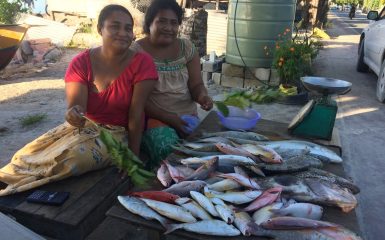
See also: NAP Global Network report on Strengthening Gender Considerations in Kiribati’s NAP Process. Kiribati—a country made of 33 low-lying atolls scattered across the Pacific Ocean—is already experiencing an increase in sea-surface temperatures and sea-level rise. Adding to these risks is Kiribati’s extreme remoteness, with hundreds of kilometres of ocean between the atolls and their […]