Insights
Analysis and commentary on the Network’s experiences coordinating climate-resilient development.
Ghana, Netherlands, and Peer Governments Gather in Accra to Accelerate National Action to Adapt to Climate Change
ACCRA, Ghana — From August 17 to 19, the governments of Ghana, Kenya, the Netherlands, and South Africa are convening…
From Country Priorities to Global Signals: A step-by-step guide to adaptation indicators for national monitoring, evaluation, and learning systems
Countries left the Bonn Climate Change Conference last week without an agreement on issues related to the global goal on…
La República Dominicana Fortalece la Colaboración en el Proceso de Actualización del Plan Nacional de Adaptación
La República Dominicana organizó en febrero pasado una serie de consultas entre actores clave del gobierno y la comunidad, para…
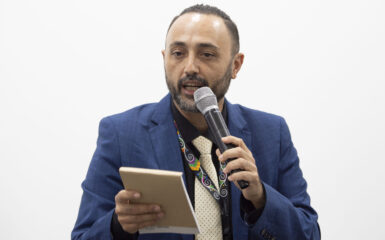
¿El problema está en el cielo o en la tierra? Organización social del territorio frente al cambio climático
Por MSc. Iván Alonso Delgado-Pitti, Director de Cambio Climático, Ministerio de Ambiente Costa Rica
El Director de Cambio Climático, Iván Alonso Delgado-Pitti, explora los procesos locales de planificación de la adaptación en Costa Rica.
Is the Problem in the Skies or on Earth? The social organization of the territory in the face of climate change
By Iván Alonso Delgado-Pitti MSc, Director of Climate Change, Ministry of Environment, Costa Rica
Director of Climate Change, Iván Alonso Delgado-Pitti, explores locally-led adaptation planning processes in Costa Rica.
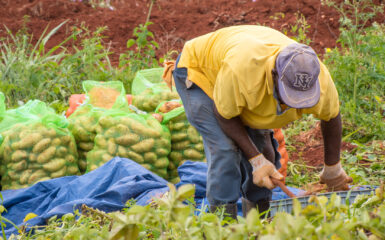
Shaping Jamaica’s Adaptation Communication: Challenges and opportunities
By Leslie Walling and Anne-Teresa Birthwright, Climate Change Specialists
The development of Jamaica’s first AdCom commenced in July 2021 with the aim of documenting the barriers, gaps, and challenges while noting the priorities, experiences, good practices, and support needed for effective adaptation.
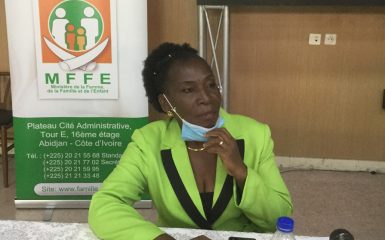
Comment la Côte d’Ivoire accélère la prise en compte du genre dans l’action climatique : le renforcement des capacités des acteurs nationaux
Un entretien de Julie Dekens avec Florence Tanoh, directrice du genre et de l’équité au ministère de la Femme de Côte d’Ivoire.
Nous nous sommes entretenus avec Florence Tanoh, Directrice du Genre et de l’Équité au sein du ministère de la Femme pour mieux comprendre comment le renforcement des capacités contribue à améliorer la prise en compte des liens entre le genre et les changements climatiques.
How Côte d’Ivoire Is Accelerating Gender Mainstreaming in Climate Change Action: Building the capacities of national actors
An interview by Julie Dekens with Florence Tanoh, Director of Gender and Equity at Côte d’Ivoire’s Ministry of Women
A conversation with Florence Tanoh, Director of Gender and Equity at Côte d’Ivoire’s Ministry of Women, on how capacity building helps to take better account of the linkages between gender and climate change.
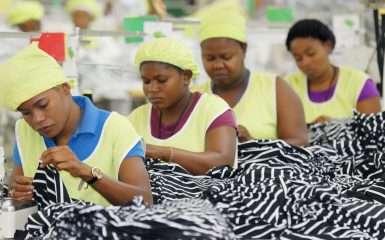
La société civile et le secteur privé, deux partenaires incontournables dans la réussite du processus de PNA d’Haïti
Par Patrick Saint-Pré, Consultant en communication
Au cours des 20 dernières années, Haïti a été l’un des trois pays les plus touchés par les épisodes météorologiques extrêmes, qui risquent d’augmenter compte tenu du rythme actuel du réchauffement climatique. Pour tenter de résoudre cette situation, Haïti a lancé un processus PAN en août 2019 afin de renforcer la résilience des secteurs économiques stratégiques du pays.
Civil Society and the Private Sector: Two essential partners for a successful NAP process in Haiti
By Patrick Saint-Pré, Communications Consultant
Over the past 20 years, Haiti has been one of the three countries most affected by extreme weather events, which are likely to increase given the current rate of global warming. In an attempt to resolve this situation, Haiti launched a NAP process in August 2019 to increase the resilience of the country’s strategic economic sectors.
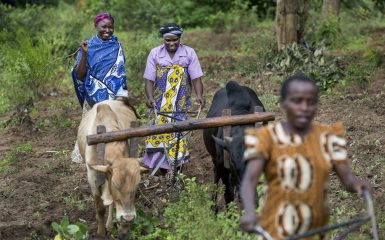
Eight Key Lessons of NAP Progress Reporting From Kenya and Burkina Faso
By Patrick Guerdat, International Institute for Sustainable Development (IISD)
During a webinar in June 2021, NAP focal points Kouka Ouedraogo (Burkina Faso) and Thomas Lerenten Lelekoitien (Kenya) shared key lessons from their work on approaching NAP progress reporting.