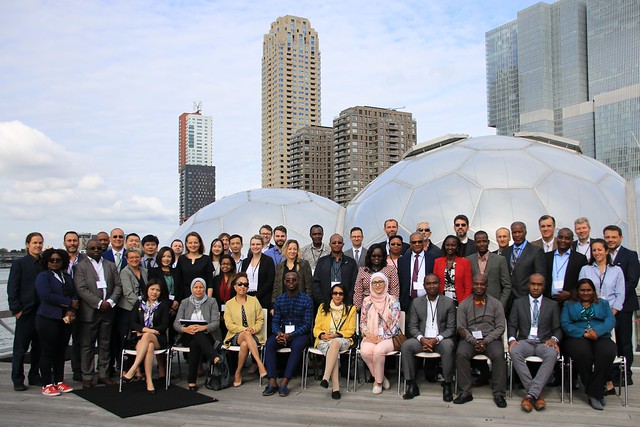
Over 50 representatives from 12 countries came together in Rotterdam, the Netherlands, to discuss how developing country governments can engage businesses and investors in the development and implementation of their National Adaptation Planning (NAP) processes.
Hosted by the NAP Global Network, with support from the Government of the Netherlands, the objectives of this Peer Learning Summit were for participants to:
- Identify and share country experiences and enabling factors for private sector engagement in the NAP process.
- Identify needs and gaps for government action from the perspective of private sector actors in key priority sectors such as tourism and agriculture, in order to facilitate their engagement in NAP processes.
- Reflect on the role that donors and climate support initiatives can play in fostering greater private sector engagement in NAP processes.
Countries in attendance included Ghana, Saint Lucia, Rwanda, Morocco, Vietnam, Brazil, Colombia, Jamaica, Côte d’Ivoire, Kenya, Sierra Leone and Jordan, as well as a range of bilateral development partner agencies and international climate support initiatives.
Unavoidable carbon emissions for this event were offset through UNFCCC’s Climate Neutral Now initiative.
Check out our Flickr album from the Peer Learning Summit
To learn more about this topic:
- Read the NAP Global Network’s guidance note, Engaging the Private Sector in National Adaptation Planning Processes.
- Follow our five-part blog series, with a new blog each week in the lead-up to this event:
- Part I: What is the Business Case for Private Investment in the NAP Process?
- Part II: Knowledge is Power: Why information sharing is key to engaging businesses in the NAP process
- Part III: Paying for it: How governments can help the private sector overcome financial barriers to investing in adaptation
- Part IV: For MSME Day, We Look at How Institutional Arrangements Can Engage Small Businesses in Climate Adaptation
- Part V: When Life Gives You Lemons: How to bolster businesses’ capacity for making lemonade out of a changing climate