
- Scaling up implementation of adaptation through the NAP process
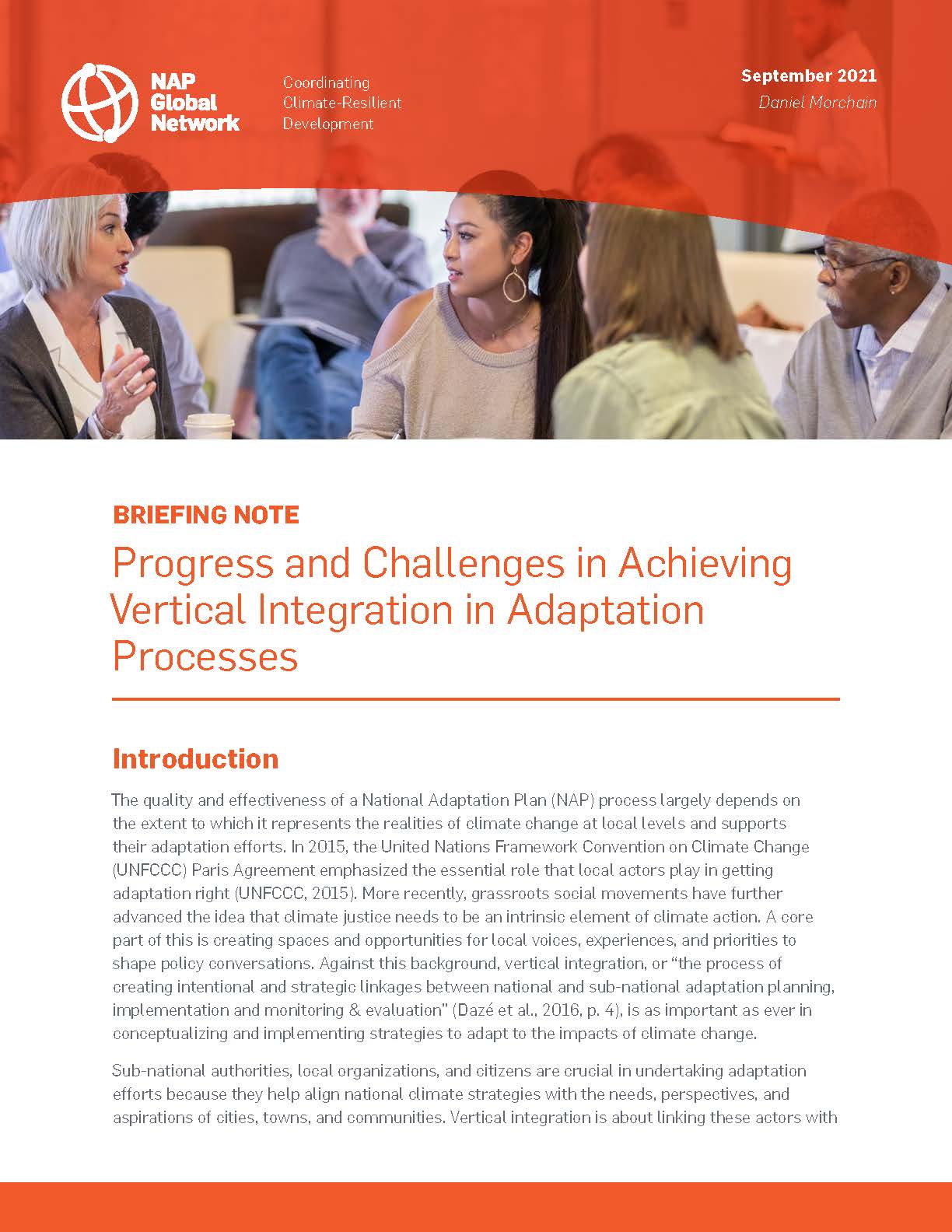
- Challenges and opportunities of vertical integration in the NAP process
- Monitoring, evaluation, and learning (MEL), with a focus on progress reporting.
Join us at these events:
 1.4.1 – Scaling Up Implementation of Climate Adaptation Through National Adaptation Plans
Date: Monday, March 27, 2023Time: 4:00 p.m. – 5:30 p.m. (Santiago time, UTC–3)Location: Valle del Maipo, Best Western Premier Marina Las CondesHosts: United Nations Development Programme, United Nations Environment Programme, and the NAP Global NetworkWatch the livestream on Microsoft Teams.The objective of the session is to facilitate knowledge exchange among country representatives on emerging experiences in implementing NAPs to identify relevant tools, frameworks, and lessons learned. Representatives from Costa Rica, Albania, and Haiti will share their lessons learned on identifying barriers and opportunities to accelerate adaptation action.
 3.3.1 – Vertical Integration in the NAP Process: Opportunities for and challenges to implementing adaptation actions
Date: Wednesday, March 29, 2023Time: 2:00 p.m. – 3:30 p.m. (Santiago time, UTC – 3)Location: Valle de Colchagua, Best Western Premier Marina Las CondesHosts: NAP Global Network, Deutsche Gesellschaft für Internationale Zusammenarbeit (GIZ), and EUROCLIMAWatch the livestream on Microsoft Teams.This session will focus on vertical integration, the process of creating intentional and strategic linkages between local, sub-national, national, transboundary, international, and global adaptation, including in planning and implementation, as well in monitoring, evaluation, and learning.Vertical integration in NAP processes is important because it can facilitate a continuous exchange between key stakeholders (from government, civil society, and business) across governance scales. Incorporating sub-national actors in the implementation of adaptation commitments, plans, and strategies increases ownership of the country’s adaptation efforts. This session will create space for peers from Global South’s countries to exchange experiences and lessons learned.
 3.3.3 – Monitoring, Evaluation, and Learning in the Context of Global Processes and Reporting Progress on NAPs
Date: Wednesday, March 29, 2023Time: 2:00 p.m. – 3:30 p.m. (Santiago time, UTC – 3)Location: Valle del Maipo, Best Western Premier Marina Las CondesHosts: United Nations Development Programme, United Nations Environment Programme, and the NAP Global NetworkWatch the livestream on Microsoft Teams.Most countries are developing monitoring, evaluation, and learning (MEL) systems to track progress under their NAP process as there is a growing need for local communities affected by climate change and for national governments leading the response, to see positive results from NAPs. However, actively tracking the implementation of NAPs and reporting on the progress made can be challenging as different MEL systems can be used at the national level, but with limited resources. The session will enable the sharing of perspectives, experiences, and lessons learned on MEL of NAPs in the context of global processes and look more closely at how countries report progress on their NAPs.
 3.4.1 Creating a National Adaptation Programme and Building Long-term Capacity for Implementing the Paris Agreement
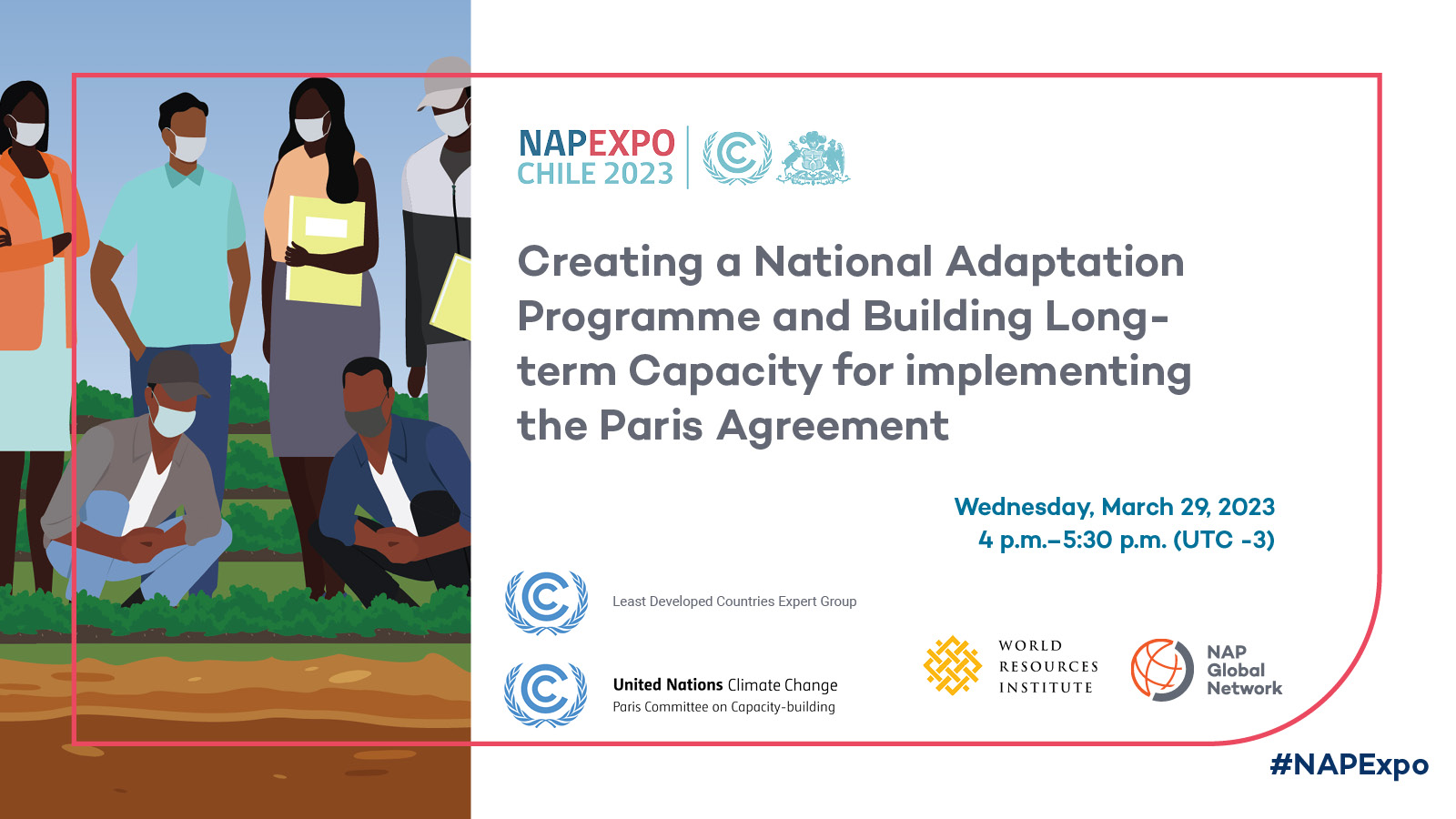
Date: Wednesday, March 29, 2023Time: 4:00 p.m. – 5:30 p.m. (Santiago time, UTC – 3)Location: Valle del Maipo, Best Western Premier Marina Las CondesHosts: Least Developed Countries Expert Group, Multi-stakeholder forums subgroup, Paris Committee on Capacity-building, World Resources Institute, and the NAP Global NetworkThe number of issues that least developed countries (LDCs) and other developing country Parties need to address to fulfil their responsibilities under the Convention and the many elements of the Paris Agreement has significantly widened over the years. These include implementing actions to mitigate and adapt to climate change; assessing the level of greenhouse gas emissions, climate risks, capacity gaps and needs; reporting on the greenhouse gases and national measures to the UNFCCC; and a suite of peripheral activities to underpin effective climate change policy and response.The session will discuss how a national government can implement the Paris Agreement by creating a national adaptation programme that considers the various actions under the Convention and the Paris Agreement, including consideration of underlying capacity needs.
 Discover the latest information and trends in National Adaptation Plans (NAPs).Visit NAP Trends
Related resources
-
About the NAP Process and the NAP Global Network
-
Monitoring, Evaluation, and Learning, and Reporting Progress on NAPs
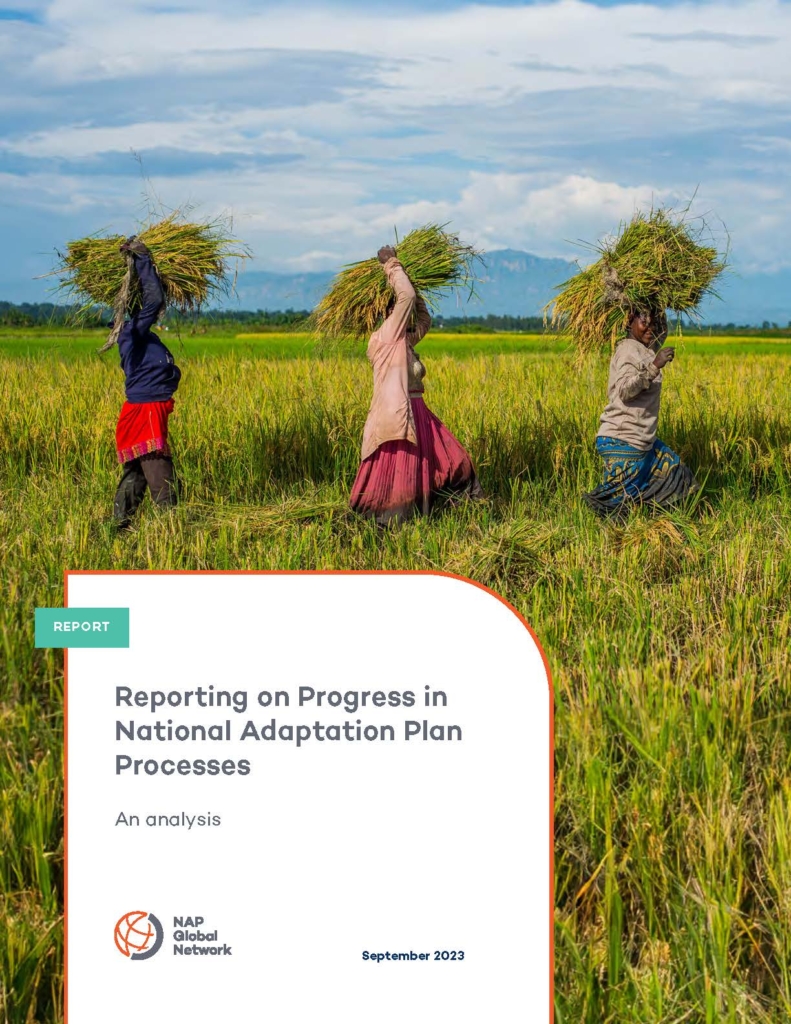
– Reporting on Progress in National Adaptation Plan Processes
– Albania’s National Adaptation Plan: First progress report
– Brief | Introduction to Adaptation in the Global Stocktake
– Guidebook | Developing National Adaptation Monitoring and Evaluation Systems
– Webinar | Approaches to Progress Reporting on National Adaptation Plan (NAP) Implementation
– Blog | Approaches to Progress Reporting on National Adaptation Plan (NAP) Implementation
– Saint Lucia’s First National Adaptation Plan Progress Report
-
Vertical Integration
-
Nature-based Solutions
Contact
For more information on the NAP Global Network’s activities and engagements, contact the Secretariat team at info@napglobalnetwork.org.For media enquiries, please contact Communications Officer Cesar Henrique Arrais at chenriquearrais@iisd.ca.Join a network of adaptation decision-makers and practitioners from developing countries working on National Adaptation Plan (NAP) processes to:
- Receive the NAP Global Network’s monthly newsletter with news and useful resources
- Apply for technical support opportunities
- Take part in peer exchanges.