-
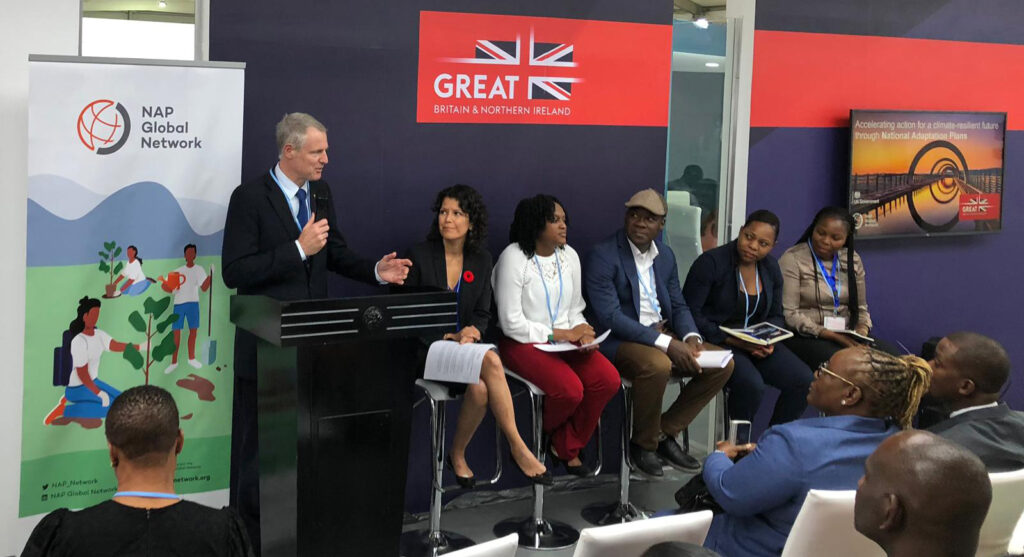
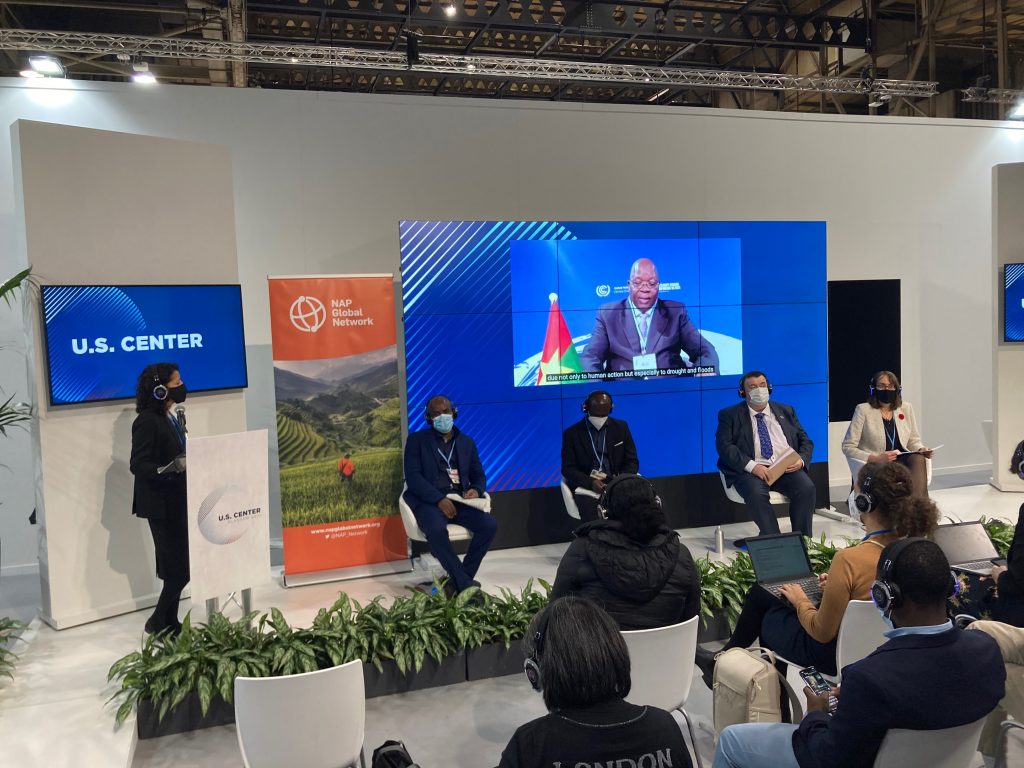
Accelerating Action for a Climate-Resilient Future Through National Adaptation Plans
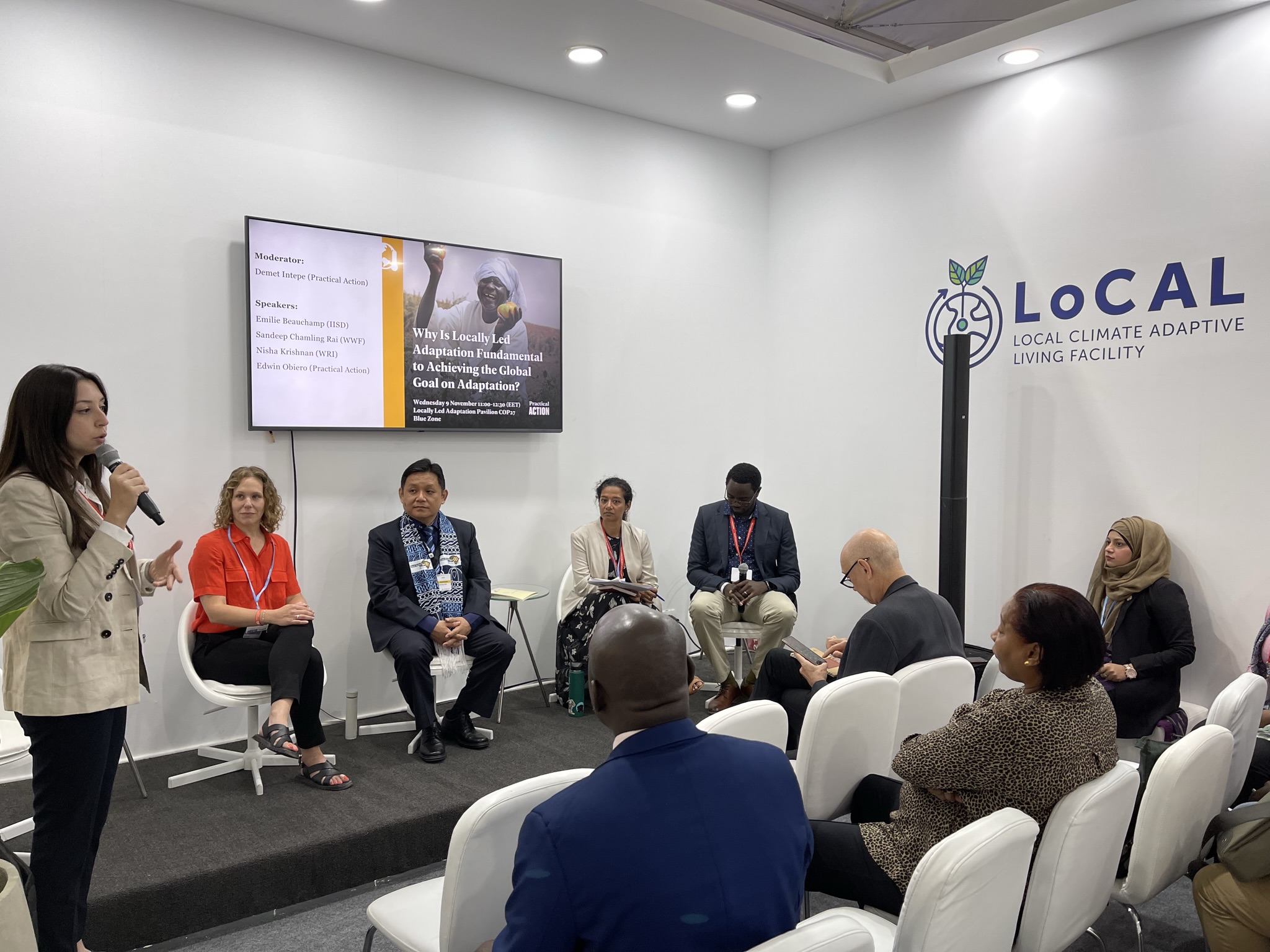
 When: Tuesday, November 8, 11:45–12:30 (GMT+2)
Where: United Kingdom Pavilion
Organizer(s): Foreign, Commonwealth and Development Office (FCDO Adaptation), Nature & Resilience Department, and the NAP Global Network
Article: Highlights and photos from event.
More details: Event page.The United Nations has reported that 129 developing countries have launched NAP processes. This event will showcase adaptation priorities and progress in developing countries while demonstrating the urgent importance of inclusive, effective national adaptation planning to advance action.
Speakers from Eswatini, Liberia, Saint Lucia, and Zimbabwe will share examples and perspectives from their NAP processes.
-
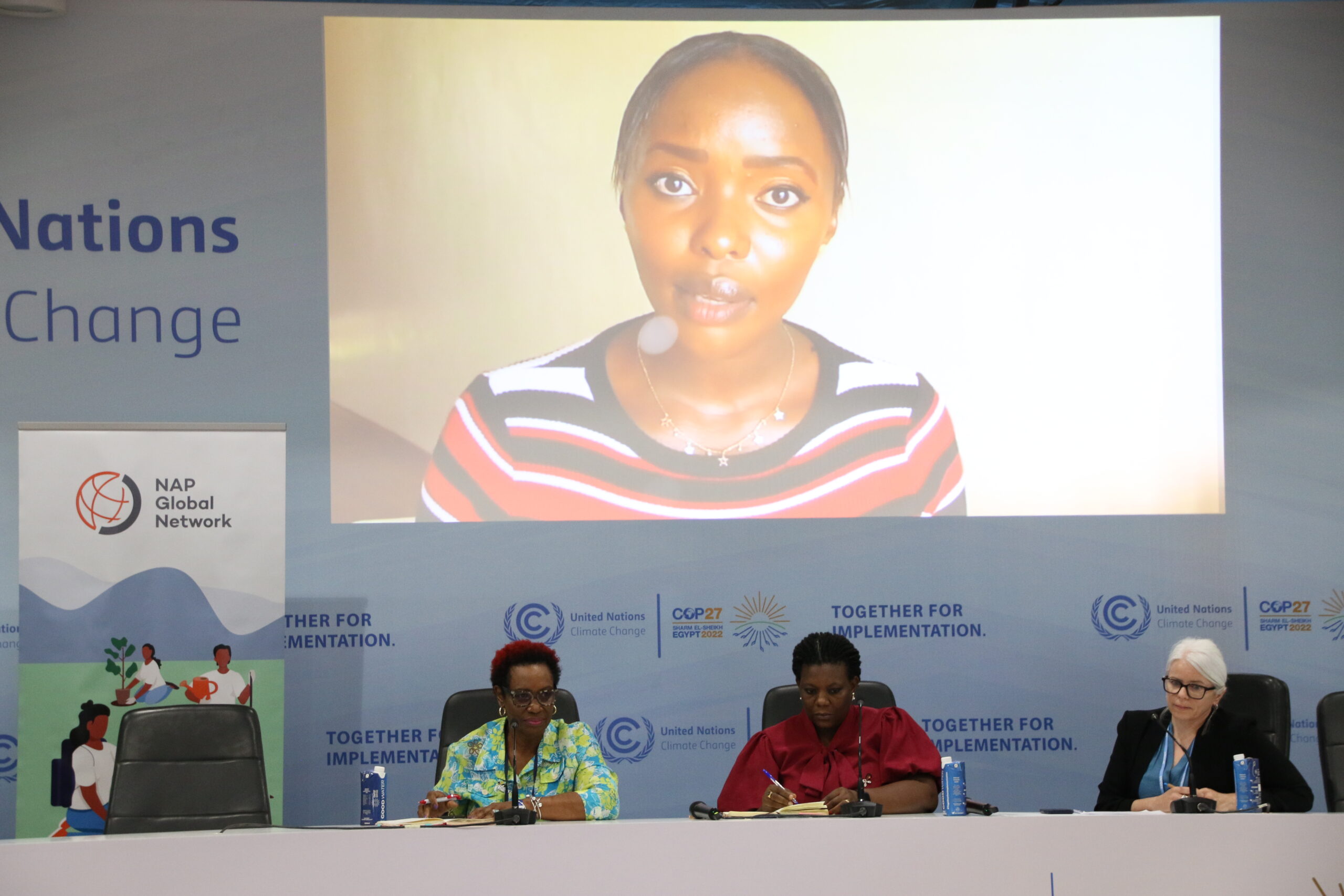
Enhancing Capacities and Networks for Women's Leadership in Adaptation Action
Watch the event’s full recording.When: Wednesday, November 9, 14:35–15:40 (GMT+2)
Where: 4th Paris Committee on Capacity-Building (PCCB) Hub
Organizer(s): NAP Global Network
Article: Highlights and photos from event.
More details: Event page.For adaptation to climate change to be effective and gender responsive, women’s leadership is needed at all levels of decision making. Through dialogue with national decision-makers and experts involved in NAP processes, this event will explore why women’s leadership matters in national-level policies and plans, how it can be enabled, and the difference this makes for gender-responsive adaptation action on the ground.
-
Midway Through the Glasgow Sharm el-Sheikh (GlaSS) Work Programme on the Global Goal on Adaptation (GGA): Next steps to fill up the GlaSS?
Watch the event’s full recording.When: Thursday, November 10, 19:00–20:00 (GMT+2)
Where: WWF Panda Hub Pavilion
Organizer(s): World Wide Fund For Nature (WWF) and NAP Global Network
More details: Event page.At COP26 in Glasgow, CMA adopted a decision to establish and launch a comprehensive two-year Glasgow-Sharm el-Sheikh (GlaSS) work programme on the Global Goal on Adaptation (GGA). The GlaSS is to pave the way forward on operationalizing the GGA by COP28. It aims to provide greater understanding on the GGA, while increasing visibility of adaptation issues; assess the financial, technical and capacity building resources needed; and recognize adaptation efforts undertaken by countries.
Most importantly, discussions through the GlaSS are meant to guide countries towards an agreement on the architecture and content of the GlaSS. With COP27 sounding the mid-way point of the GlaSS, where are we at now? What does COP27 need to deliver, and what must thus be done by COP28?
This event aims to take stock of what key areas of consensus have been achieved over the year, what should be achieved at COP27, and what needs to be delivered ahead of COP28—and the end of the GlaSS. The event aims to highlight the critical importance of the GlaSS work programme, and its linkages with ongoing national plans and systems, and recognizing the ongoing efforts of countries contributing to the GGA.
How to Raise the GlaSS on the Global Goal on Adaptation at COP 27: Four foundations to build upon
Ahead of this event, moderator Emilie Beauchamp provides a recap of the GlaSS work programme and sets out four key foundations to build on at COP27 in a new article. -
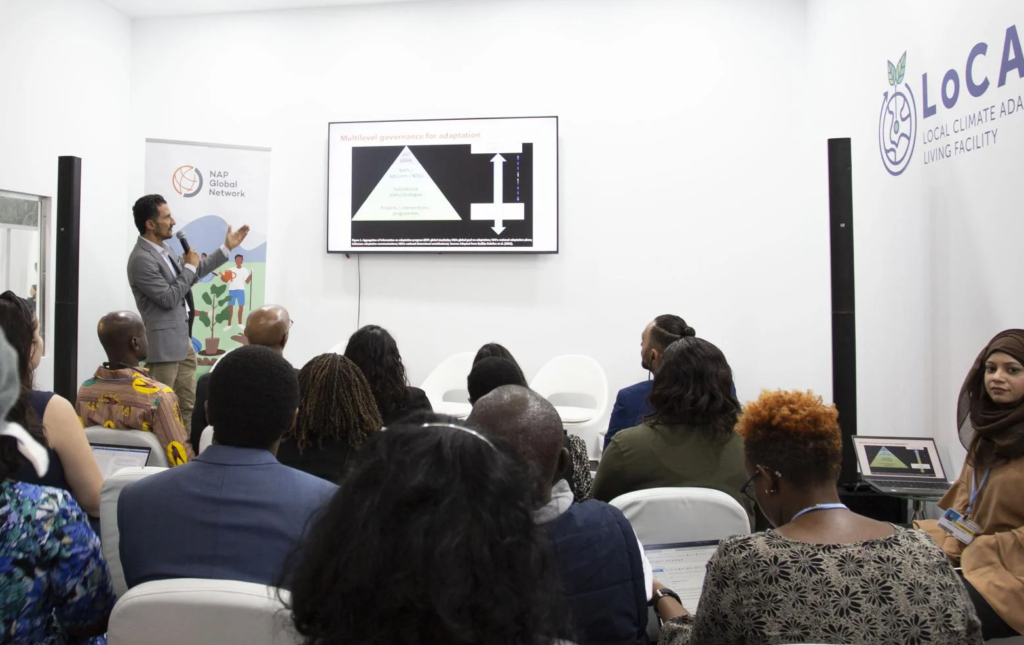
Multilevel Governance as a Catalyst for Adaptation Finance at the Local Level
When: Friday, November 11, 13:00–15:00 (GMT+2)
Where: Locally Led Adaptation Pavilion
Organizer(s): NAP Global Network
Article: Highlights and photos from event.
More details: Event page.This event will showcase lessons learned and good practices in subnational-level climate adaptation finance, with strategic links to NAP processes that present an opportunity for countries to establish mechanisms for channelling finance to local levels. Representatives from Africa and Latin America will share their diverse experience with local-level adaptation planning and implementation.
These examples will highlight how multilevel governance structures (including formal and informal institutional arrangements) and capacity-development/empowerment processes facilitate financial flows and budgeting for climate change adaptation at the local level.
-
Capturing and Showcasing Progress in Adaptation and the Sustainable Development Goals
Watch the event’s full recording
When: Saturday, November 12, 17:45–18:45 (GMT+2)
Where: Main Stage, SDG Pavilion
Organizer(s): NAP Global Network
More details: Event page.More and more countries are developing and implementing National Adaptation Plans (NAPs) to advance policies and strategies that lead to both resilient and sustainable development. Yet examples showcasing progress in adaptation and development action are still limited.
During this event, countries will share how they have defined progress in adaptation across priority development sectors, along with tools and processes they have used to capture and communicate progress. Defining and capturing resilience outcomes across different sectors and the Sustainable Development Goals (SDGs) is critical to provide evidence to further adaptive policies. It is also key to reinforce existing national monitoring, evaluation and learning systems, along with informing policy conversations around the Global Goal on Adaptation and the Global Stocktake.
-
Gender-Responsive Adaptation in Africa: Examples and challenges ahead
Watch the session’s full recording.
When: Monday, November 14, 13:00–14:00 (GMT+2)
Where: IDFC – International Development Finance Club Pavilion
Organizer(s): Adapt’Action (AFD), NAP Global Network, and the UNDP
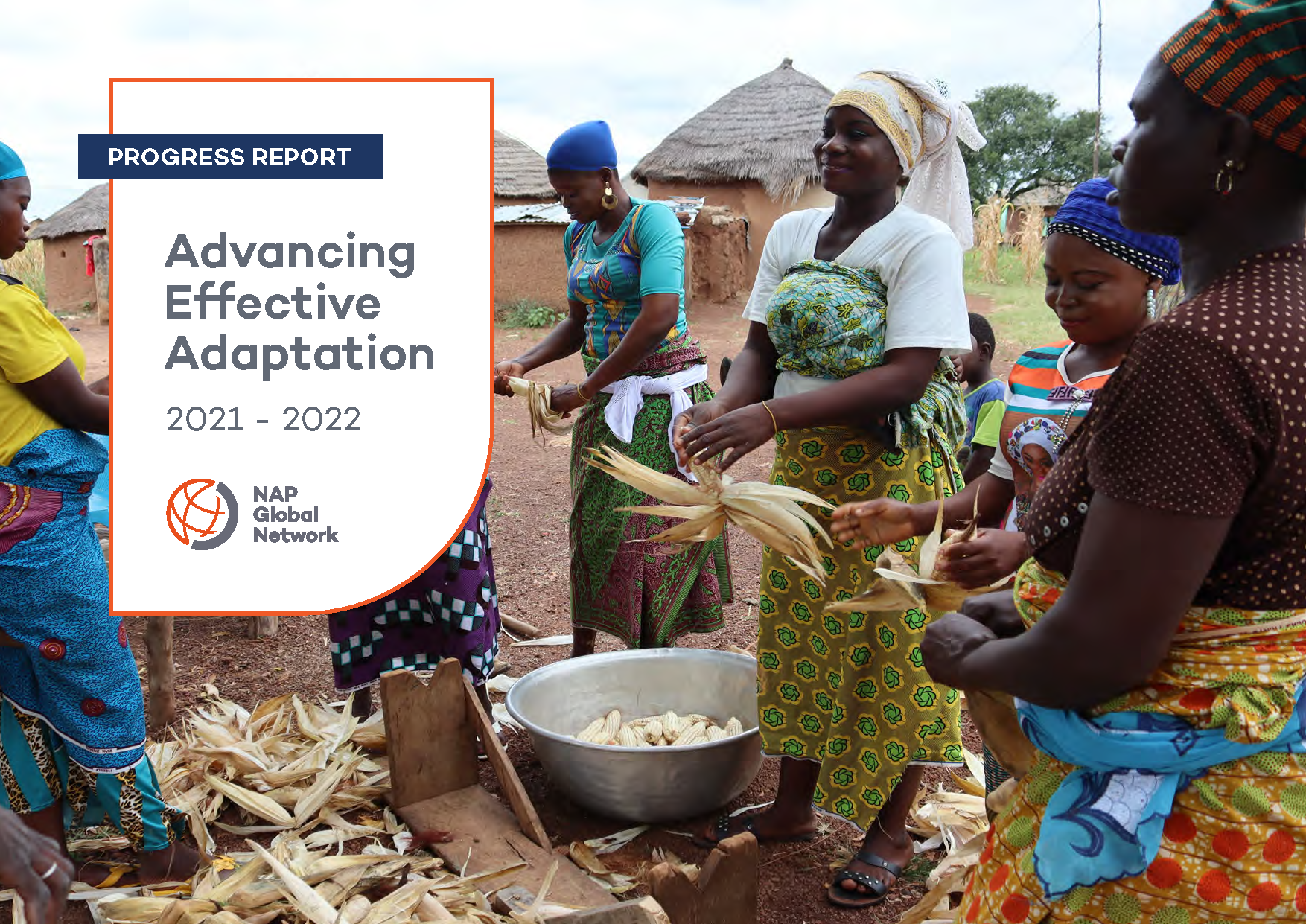
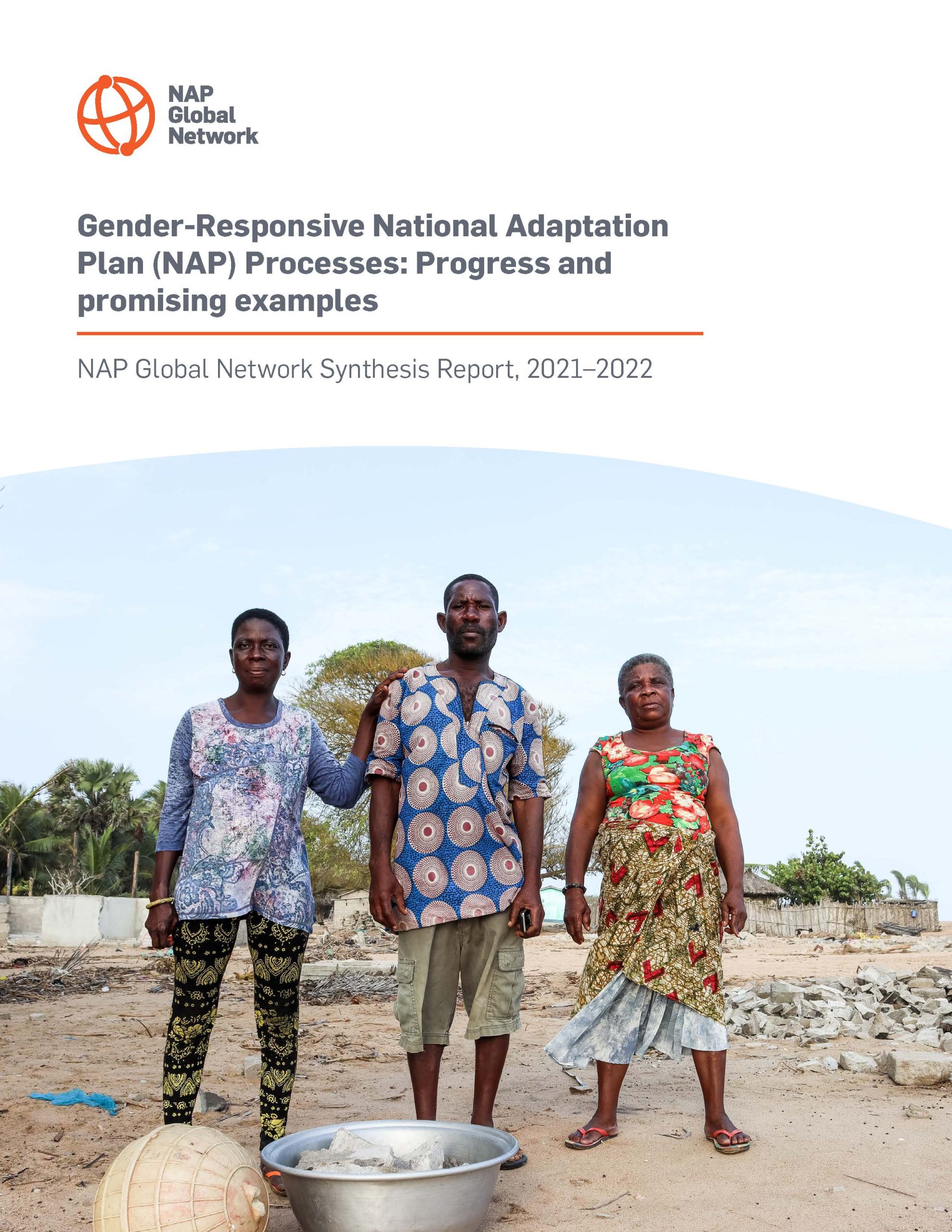
More details: Event page.The UNFCCC Gender Action Plan agreed at COP25 in 2019 gave an impetus to strengthen gender issues within adaptation strategies (nationally determined contributions, NAPs) and projects. Now at the midpoint of the UNFCCC GAP, where do we stand in terms of gender-responsive adaptation strategies in Africa?
This session will share inspiring examples from the NAP Global Network’s experiences with developing countries and highlight key points from its recent synthesis report on gender-responsive NAPs. Participants will also explore lessons learned and key outputs from AFD’s AdaptAction Programme in Africa. Finally, panellists from Benin and Senegal will share their countries’ progress and experiences with gender-responsive adaptation.